How Many Smoke Detectors Do You Need TO Install?
How many smoke detectors does your home need? This is one topic where underestimating can be downright dangerous. All homeowners should know that you’re required by law to have working smoke alarms at your residence.
However, the number of smoke detectors needed for your home can vary based on home size and layout. Let’s make sure you’re prioritizing fire safety at your Alabama home with some tips on installing enough smoke detectors in the right places.
By the Numbers: How Many Smoke Detectors Are Needed in a Home?
The National Fire Protection Association (NFPA) dictates that individual smoke alarms should cover a radius of 21 feet and an area of coverage ranging from 900 to 1,500 square feet. The maximum distance between two fire alarms in a home should be around 30 feet. In Alabama, homeowners may have different rules depending on the type of residence they own.
For example, owners of manufactured homes in Alabama are required to place at least one smoke detector in the hallway or space that connects bedroom(s) to the living area. When placed in a hallway, a smoke detector is required to be situated between the return air intake and the living area.
What’s the simple rule to follow for how many smoke detectors your home needs? Just start with square footage for the simplest answer. The overall recommendation for a standard two-story home (1,500 to 2,000 square feet) with three bedrooms and a basement is six to eight smoke alarms in total.
Where to Put Fire Alarms in Your Home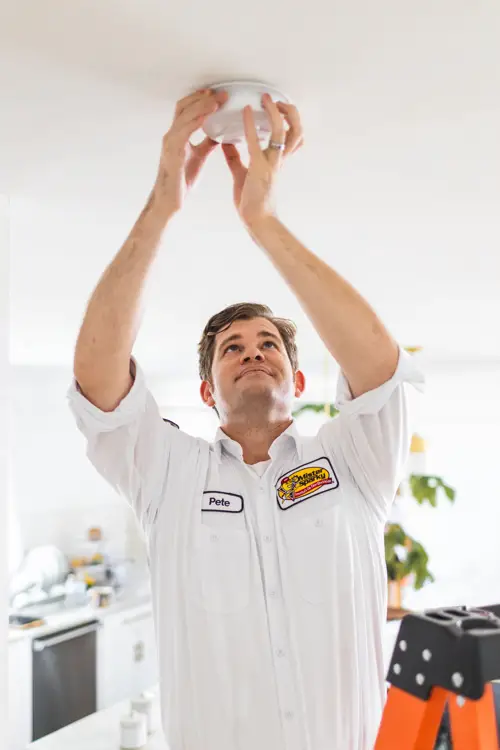
Your home’s smoke detectors need to be pretty evenly spaced to ensure full coverage. However, placement comes down to more than just making sure there’s an alarm every 30 feet. Here are the key areas of your home that require smoke detectors:
Every level: The bare minimum is to have one smoke detector on each level of your home.
Bedroom areas: Ideally, every bedroom should have its own smoke detector. It’s also important that a smoke detector is placed outside each sleeping area or hallway. If your home has more than one designated bedroom wing, you’ll need a separate smoke detector for each wing.
Kitchen: It’s important to have a smoke detector near your kitchen because this is one of the places in your home where a fire is most likely to start. However, many homeowners are surprised to learn that it’s not actually advised that you place a smoke detector directly in your cooking space.
Having a smoke detector directly in the center of your kitchen or near your cooking range increases the risk for “false” alarms when you’re cooking. These false alarms increase the likelihood that you’ll disable your smoke detector to avoid the nuisance of it going off regularly.
Unfortunately, this can put you at risk for not being alerted to dangerous smoke. This is why it’s recommended that you place a smoke detector at least 10 feet from your kitchen’s cooking appliances.
Basement: If your home has a basement, it’s important to have a smoke detector in this space.
Utility closet: A utility closet or laundry area that contains your home’s HVAC system, water heater, washer and dryer, and other major appliances or systems should have its own dedicated smoke detector.
Garage: If your home has a garage, add a smoke detector to ensure that you’re safe from accidents stemming from any flammable materials you’re storing, your car’s engine, or maintenance equipment that uses fuel or batteries.
Maintaining Your Home’s Smoke Alarms
Just having the recommended number of smoke alarms in your home isn’t enough to keep your family safe and protected. You also need to maintain and replace smoke alarms to ensure they’re working effectively when it counts.
Here are the best practices for keeping your smoke alarms working properly:
- Don’t disable “annoying” alarms: Avoid the temptation to disable or take down a smoke alarm that goes off repeatedly. An alarm that’s constantly chirping is letting you know that its battery needs to be replaced. If an alarm is going off constantly because it’s too close to your oven, consider moving it a few feet instead of getting rid of it.
- Replace batteries annually: If you have a smoke alarm that’s powered by alkaline batteries, your batteries need to be replaced once a year. Even batteries that appear to be working just fine still need to go. Put the task on the calendar. If you have a newer alarm that contains a 10-year lithium battery, you’ll simply dispose of the battery with the smoke detector at the end of the full unit’s 10-year lifespan.
- Replace your unit: Smoke alarms should be replaced once every 10 years.
- Consider a whole-house smoke alarm system: If you’re struggling with alarm maintenance or you’re
 concerned about not hearing alarms in the night, consider upgrading to a hardwired smoke alarm system. The advantage of this system is that you don’t have to worry about relying on batteries because the entire system connects to your home’s electrical system. However, there are still battery backups for safety. The big benefit with these systems is that an alarm being triggered in one part of your home will activate every alarm to ensure you don’t miss the alert even if you’re asleep.
What About Carbon Monoxide Detectors?
To make things easy, always inspect and do maintenance on your home’s carbon monoxide detectors whenever you’re addressing your smoke alarms. The average three-bedroom home needs three to four carbon monoxide detectors.
Make sure you have one on every floor of living space, one in your basement, and one in your garage. It’s also recommended to place at least one of your home’s carbon monoxide detectors within 10 feet of your bedroom doors. A carbon monoxide detector generally lasts five to seven years. Homeowners should do monthly tests and twice-annual battery checks.
Get Your Smoke Detectors Checked by Trusted Electricians in Birmingham, Alabama
Every homeowner needs to get serious about fire safety. At Mister Sparky, we’re here to help you make sure your family is protected. Whether you want the peace of mind of getting your smoke detectors checked or you’re interested in learning about getting a hardwired smoke alarm system in Birmingham.
Our pros can help you make sure you’re following all of Alabama’s fire codes for smoke detector placement based on the specifics of your property. Don’t put up with any malarky, call Mister Sparky. Book your appointment today!
